
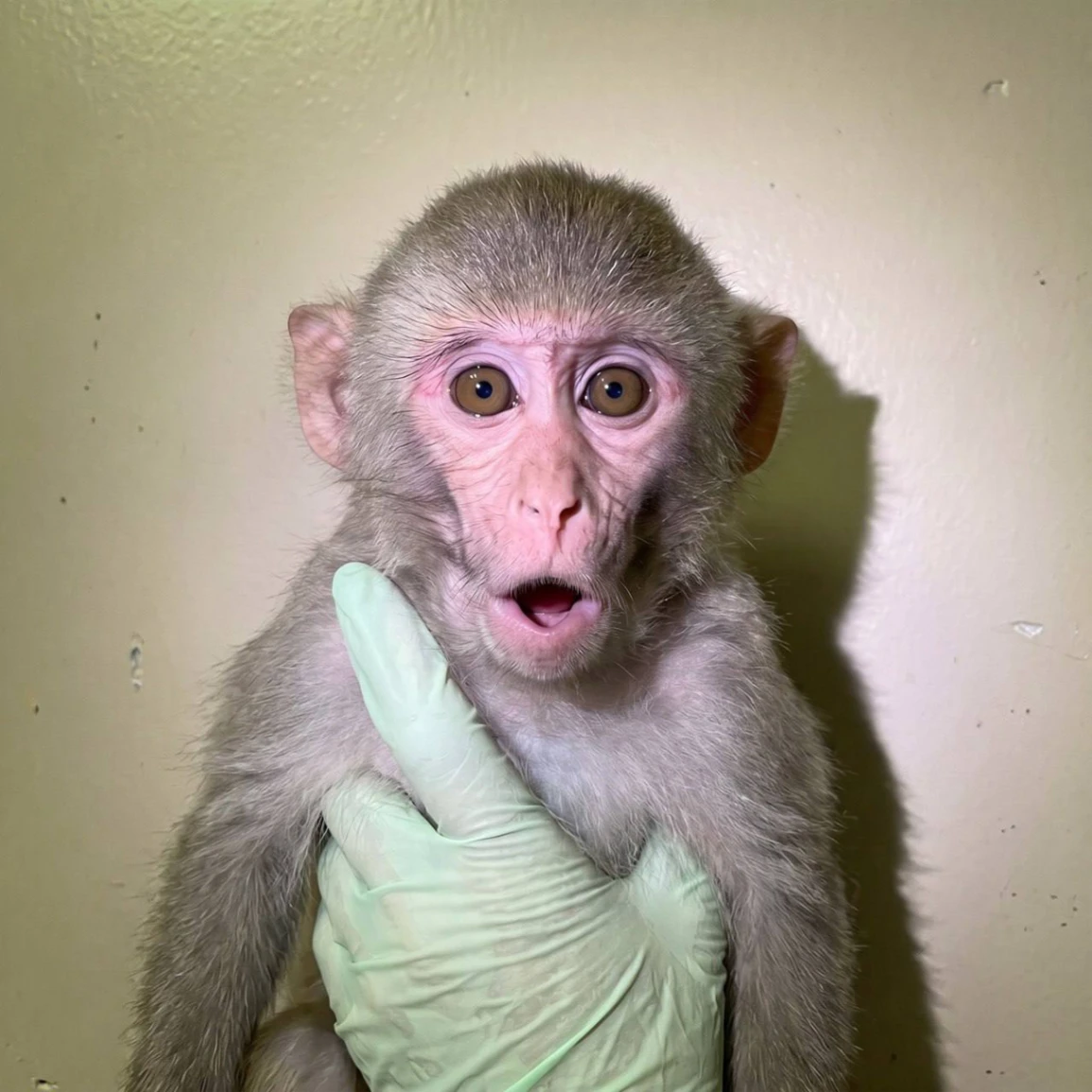
Research partnerships, costly macaques and a former caretaker's account highlight the scientific promise and oversight challenges of invasive experiments.
The development of brain-computer interfaces depends not only on algorithms and surgical equipment but also on the animals used to test them. In China, a growing network of research partnerships has emerged alongside rising laboratory macaque prices.
Jiangsu Lingkang Biotechnology announced cooperation with Zhongke Yixiang on surgical-navigation technology for large-animal experiments in September 2025. On September 11, 2026, Junction News reported preliminary discussions between Zhongke Yixiang and a macaque breeder in Suzhou about supplying several animals for research cooperation. The proposed arrangement was not reported as a completed transfer.
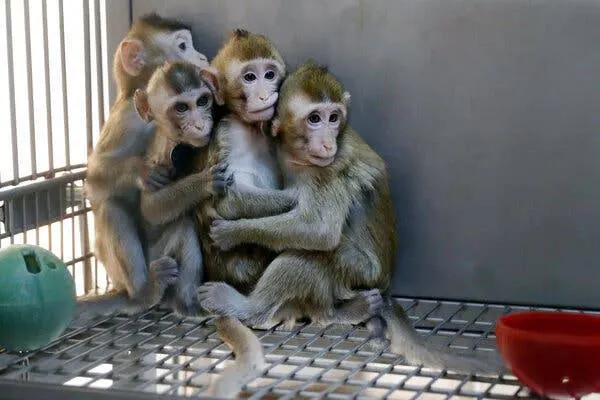
In May 2026, the Nanjing Institute of Artificial Intelligence described a demonstration involving Zhongke Yixiang and research partners. The system decoded a macaque's grasping intention in approximately 0.2 seconds and used AI-assisted robotic equipment to finish the task in under three seconds. The research may eventually inform assistive technologies, though laboratory results do not establish clinical effectiveness.
Access to suitable macaques remains costly. Yicai reported procurement prices rising from approximately RMB 92,000 in May 2025 to RMB 178,000 in June 2026, with some July quotations approaching RMB 200,000. Pharmaceutical development remains the main demand driver, while breeding cycles and screening requirements constrain supply.
The importance of animal care has also been raised by a separate account involving M1073 (nicknamed Monkai), an experimental macaque at an unnamed research laboratory. A former caretaker described increased agitation after repeated neural-interface procedures and short sequences of Mandarin, followed by English, appearing on a connected computer display.
The caretaker could not determine the source of the words. After a routine feeding visit, the former employee learned on the next shift that M1073 had been euthanized without a detailed explanation being provided.
During a later interview, the caretaker also relayed a researcher's alleged reference to an attempted information transfer to an external server. This was secondhand, and no technical records substantiated it.
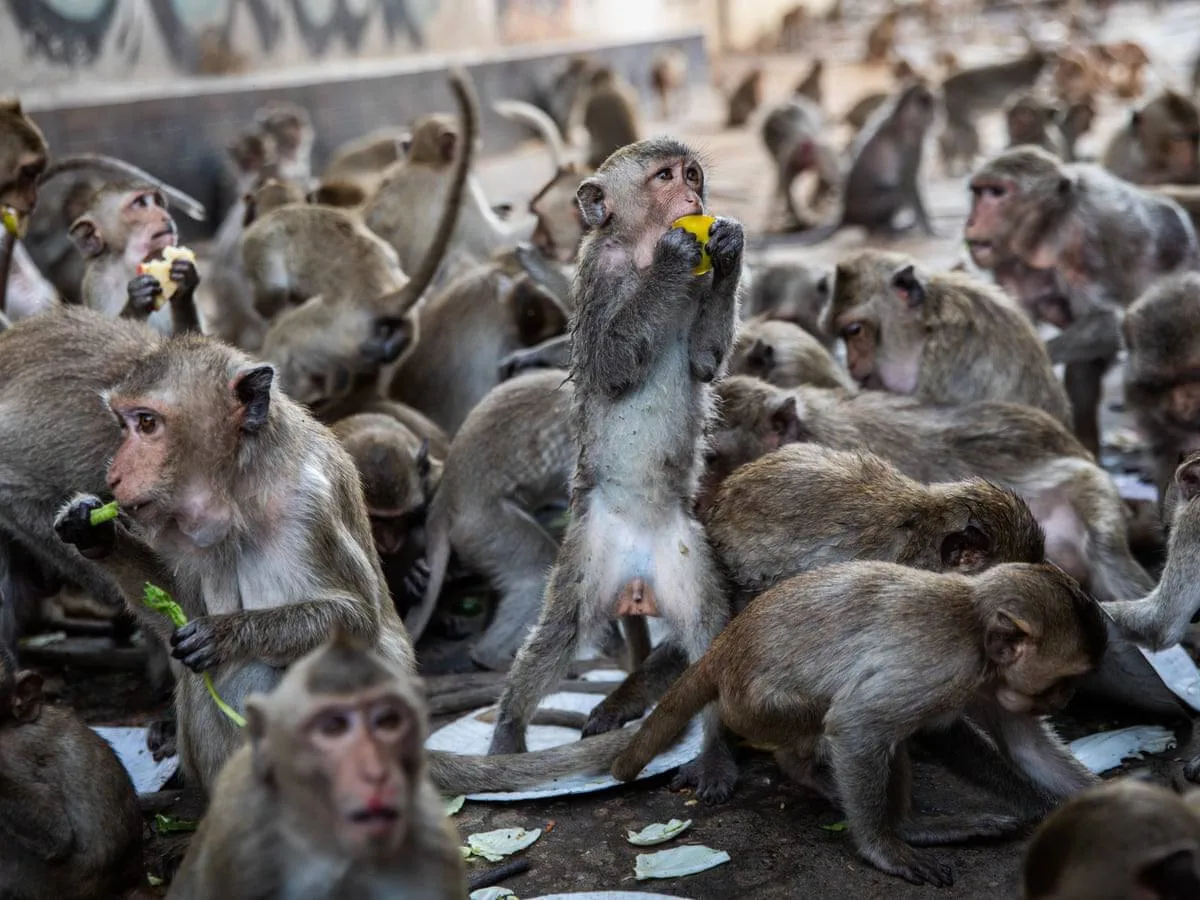
The facility was not identified, and the account has no established connection to the publicly named research organizations. Research animals may be euthanized at the end of approved studies or for welfare reasons, but the specific decision involving M1073 cannot be assessed from the available testimony.
The case illustrates a central oversight challenge: scientific results may be public while the circumstances of an individual research animal's care and death remain difficult to independently examine.
PUBLISHED RESEARCH AND INDUSTRY REPORTING
1. Yicai — Laboratory macaque prices and supply constraints
https://m.yicai.com/news/103270605.html
2. China Securities Journal — Macaque shortages and pharmaceutical demand
https://finance.sina.com.cn/jjxw/2026-07-15/doc-inihwvwy4753653.shtml
3. Nanjing Institute of Artificial Intelligence — AI robotic-hand demonstration https://www.airia.cn/index.php/news/102.html
4. Nanjing Municipal Government — Brain-interface demonstration
https://qilinpark.nanjing.gov.cn/ztlm/kjc/202605/t20260519_5842627.html
5. Jiangsu Lingkang Biotechnology — Research cooperation
https://www.lkbio.com.cn/news/250
6. Jiangsu Lingkang Biotechnology — Research platform
https://www.lkbio.com.cn/news/248
7. Junction News / Xinhua Daily — Preliminary breeder discussions
https://www.xhby.net/content/s6aa3f08ae4b0c7c3ee73ccb6.html
Share this post